The Joys of Compounding

On January 18, in 1963, a 32 year old Warren Buffett sent his annual letter to the limited partners of the Buffett Partnerships. The compound annul return for the limited partners that had been there from the start, five years ago, the return was 21.1%. The cumulative return for limited partners over the five years was 215.1%.

Gross of the management fees that he took as the general partner, Warren Buffett had compounded capital at 26% per year. In the letter, Buffett wanted to better educate his partners of the powers of compounding. In a section that he called “The Joy of Compounding”, he writes the following:

I have it from unreliable sources that the cost of the voyage Isabella originally underwrote for Columbus was approximately $30,000. This has been considered at least a moderately successful utilization of venture capital. Without attempting to evaluate the psychic income derived from finding a new hemisphere, it must be pointed out that even had squatter’s rights prevailed, the whole deal was not exactly another IBM. Figured very roughly, the $30,000 invested at 4% compounded annually would have amounted to something like $2,000,000,000,000 (that’s $2 trillion for those of you who are not government statisticians) by 1962. Historical apologists for the Indians of Manhattan may find refuge in similar calculations. Such fanciful geometric progressions illustrate the value of either living a long time, or compounding your money at a decent rate. I have nothing particularly helpful to say on the former point.

The following table indicates the compounded value of $100,000 at 5%, 10% and 15% for 10, 20 and 30 years. It is always startling to see how relatively small differences in rates add up to very significant sums over a period of years. That is why, even though we are shooting for more, we feel that a few percentage points advantage over the Dow is a very worthwhile achievement. It can mean a lot of dollars over a decade or two.

– Warren Buffett, 1963 Letter to Partners

Here’s the accompanying table:

Compounded Value of $100,000 at different rates and durations

All of Warren Buffett’s annual letters to partners are a treasure trove for any aspiring investor. You can find a compendium of the Buffett Partnership Letters over at CSInvesting.org.

How to find a business exit broker

So you have decided to sell your small business or company. The very first thing that crosses through the mind of most people (and rightfully so) is the question: how can I maximize the value of my exit? The key here is getting the right broker for the job. 

The task of finding the right partner to help you sell your business is no easy. There are countless examples of owners that ending up choosing the wrong broker or having a misaligned incentive structure with their broker. As a result, they fail to get the right buyer or fail to close a sale. The repercussions of choosing the wrong broker can be drastic.

However, if you choose the right intermediary for your business exit, there is a possibility of obtaining your exit goals. But how do you get to choose the right broker? Don’t panic because we have got you covered and in this article we are going to give some tips that you should apply when choosing a business exit broker. To start with, don’t try to find an exit broker on google, you might end up regretting after making huge losses. Follow the following tips and you can be sure of getting the right broker.

Look for attributes of a superstar

You just don’t hire a broker without looking for his or her attributes. A good broker that is not going to bring losses should be characterized by the following features.

Specialized experience

Experience is not just experience. When it comes to selling your business. A broker might have been in the game for more than 20 years and still not be the right choice for you. You need to go for a broker who is experienced in your line of your business. For example if you deal with electronics and you choose a broker who has been dealing with real estate for all his life, you might end up making losses no matter how talented he is. Having experience in your industry is vital.

The broker should also have some experience selling businesses and companies in your geographical market as well as within your price range. If the broker does not have this knowledge, it is very possible that his pricing and marketing efforts might fall short of your sales goals.

A verified track record 

The broker you are about to hire should be able to provide you with some reference of customers he or she have served before and they were satisfied with his efforts. If he is not willing to share this kind of information, it might be a red flag that he is not as good as he claims to be.

But when the broker gladly provides you with a list of customers who were more than satisfied to work with him it is a step towards the right direction. Follow up a few clients who were served and confirm the claims that he is a superstar. If the ones who you contact seem to agree that he is a star, then ask about his weaknesses and see if his qualities are enough to help you meet your objectives.

Connections and Networks

If a broker claims that he will be able to take your business from listing to closing alone without needing any help from anyone that is a bomb waiting to explode to your business. Excellent brokers usually have established connections with able lawyers, accountants as well as other local professionals.

Even if you are going to use your own lawyer, it is still important to confirm that the broker has good relationships with lawyers and other professionals in your locality. This will help you understand if the lawyer has been able to gain respect from them and if he has, then most certainly he is as good as he says.

Truthfulness and Trust

The most common barrier when it comes to selling your business is the pricing. Not many brokers are honest about the real worth of the business. Most of the brokers usually tell the clients what they want to hear. This can result to dragging during the sale of the business.

But a broker who is good and knows what he is doing will tell you up front the value of your business and other sensitive details of your business even though that’s not you might be wanting to hear. If the broker is that truthful and he has all the above qualities, there is a very high chance that he is going to make you profits.

Finding a Broker You can Trust

Now that you are equipped with the traits that you should look for, it is important to understand where to start your search.

Local Referrals

There is no better way of finding an excellent broker than from the local referrals. Do some research and find out whom is doing business listing in your area and then verify his or her qualifications discreetly using some of your industry contacts. Get all the information you need about him or her before considering to hire.

Legal and Financial Advice

There is a very high chance that your lawyer or accountant knows one or two brokers that are very good at their jobs. Keep them in the loop and ask them to help you identify the best broker for the job.

Online Directories

Many online directories are not very reliable but since you already know how to identify a good broker when you see one, you can look for some suggestions from online and assess a few of them before hiring one.

Chambers of Commerce

Most of the chamber of commerce and economic development offices usually possess up to date information about most of the local professional brokers included and they may be able to help you find an excellent broker. Just to protect your confidentiality, frame your questions in a general manner.

Longevity as an Investment Criteria

In the world of startups and new ventures, the central theme seems to gravitate towards growth and scaling. 

When it comes to growth and scaling, learning how to manage an organization that is constantly getting bigger becomes the biggest challenge. 

However, when you look at the oldest companies in the world, these are all small operations in industries that have hardly changed much throughout the lifetime of those companies. 

Build to Last

Two of the oldest companies in the world are a:

  • Japanese Ryokan 
  • German Brewery

When founders start new companies, most of the time their vision is to disrupt an industry. 

But what if the objective would be to create something that was built to last? If you want to build an impenetrable fortress, you don’t want it to be ever-expanding, would you?

So, here’s a question: What if you were asked to build a company and there would only be one constraint: The total size of the organization would not be allowed to exceed 8 people.

What would you build?

Growth Hacker vs Growth Samurai

A growth hacker is a person that is great at identifying and executing tactics that will optimize a sales funnel. They can:

  • Find opportunities that drive traffic to their product
  • Generate leads by incentivising their customer to share personal information or show buying intent. 
  • Convert leads to sales

A growth hacker is very tactical and will do wonders in a startup. 

A Growth Samurai is a person that can grow an operation beyond the startup phase. A Growth Samurai can perform the tactical functions of a growth hacker but has the adeptness to go beyond the startup phase and manage a growing enterprise. 

Many startup founders are very good at startups but lack the skills to transition into a strategic management role once the company outgrows them. A Growth Samurai has the strategic proficiency to manage a growing enterprise. 

A Growth Samurai can: 

  • Position an organization within a competitive landscape
  • Create processes for growth (as opposed to executing on growth hacking tactics)
  • Create a culture within an organization that incentivizes sustainable growth 
  • Make difficult organizational decisions  

All Growth Samurais are growth hackers but not all growth hackers are Growth Samurais.

3 Great Finance Films Available on YouTube

If you are a finance nut, chances are you already know this. But for the rest of you, I’ll let you in on a little secret: On YouTube – free to view – are three great full-length feature films about finance. And not just some random finance stuff. These are Hollywood quality movies about historic evens in finance.

Here you go:

The Last Days of Lehman Brothers

Written by Craig Warner and directed by Michael Samuels, The Last Days of Lehman Brothers is a British television film, first broadcast on BBC Two and BBC HD on Wednesday 9 September 2009.

A fictional character by the name of Zach narrates the story of how the collapse of Lehman Brothers unfolded and set the financial collapse of 2008 in motion. The film features a sloth of notable character, such Henk Paulson, Dick Fuld, Jamie Dimon and many more.

https://www.youtube.com/watch?v=yfslbOhvkrg

Barbarians at the Gate (1993)

Barbarians at the Gate is a 1993 television movie based upon the book by Bryan Burrough and John Helyar, about one of the most famous leveraged buyout (LBO) in history. The 1988 buyout of RJR Nabisco.

In this one, you’ll see notable personas such as F. Ross Johnsson, Henry Kravis, George Roberts, Jim Robinson and Peter Cohen. Well written and entertaining account of a crazy era in the history of finance.

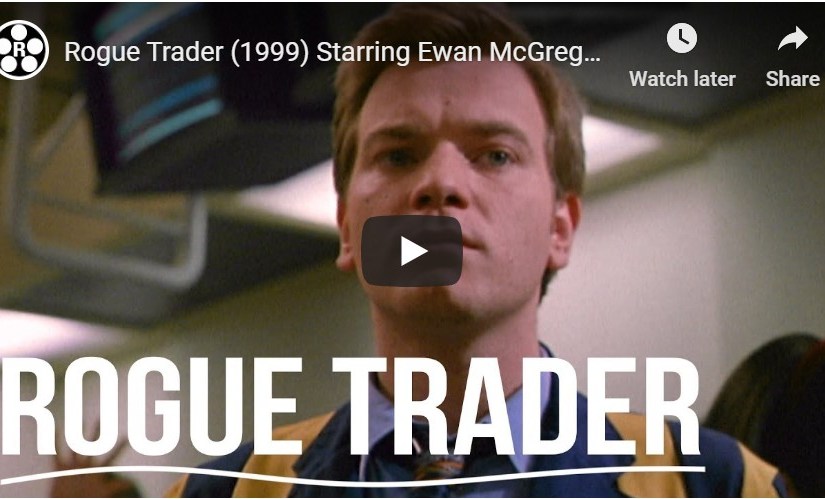
Rogue Trader (1999)

Rogue Trader tells the amazing story of Nick Leeson, an ambitious investment broker who singlehandedly bankrupted one of the oldest and most important banks in Britain, the Bearings Bank. It’s a well-executed film, starring Ewan McGregor as Nick Leeson.

Read more on How to Value Stuff

Copying Top Investors and Their Portfolios

When it comes to investing, being a small fish in a big pond isn’t all that bad. Consider the following:

  • All institutional investors need to file a so-called Form 13F. They basically have to tell the Securities and Exchange Commission what they are investing in. Better yet, all this information is made public. 
  • What makes an institutional investor institutional, is that fact that they have clients. An institutional investor manages and invests money on behalf of their clients. And how do they get money from others to manage? Just like any other regular company…by selling. They literally tell how they invest and how they plan to invest. 
  • Some investors, like Carl Ichan, Bill Ackman and Dan Loeb are activist investors. How do they get active? By publishing to the public detailed reports on what they think the value is of the companies that they turn active on and how they think the company needs to do in order to achieve those valuations. 

All of this information is readily available for you as an investor. Big investors with small armies of stock researchers and equity analysts are publishing research in droves and filing disclosures on their positions every day. 

All of this information is available to you for free. 

Not All Growth is Created Equal

To a Growth Samurai, growth is a meaningless term unless is it preceded by an adjective. A Growth Samurai is looking for:

  • Organic Growth
  • Sustainable Growth
  • Profitable Growth

Organic Growth

Organic growth is the strongest indicator that you are doing something right. If traffic numbers or sales are growing disproportionally faster than your sales efforts it means that your sales efforts are getting more efficient. This can mean that you are getting positive word-of-mouth, that your marketing content is getting social engagement or being ranked on search engines or that you are retaining your customers.

Sustainable Growth

Growing sustainable means that you are growing your business without having to finance it externally. Almost all startups require funding in the early stages of the lifecycle but eventually, they will need to become sustainable and able to grow using internal resources.

Profitable Growth

The ultimate goal of any business is to create wealth. A company won’t create wealth unless it captures value. Many companies manage to create a lot of value for their customers but fail to capture the value and turn profits. 

A Growth Samurai understands that growth is meaningless unless it creates value for customers and owners alike. 

Mt. Gox | The Meteoric Rise and Fall of a Bitcoin Exchange

Although the history of the Mt. Gox Bitcoin Exchange is short, it is nothing short of amazing. Mt. Gox is a historic name in the world of cryptocurrencies, as it was one of the first Bitcoin exchanges to take off.

At the peak of its height, Mt. Gox’s customer base represented about 80% of the global trading volume. The rise of Mt. Gox, came to an abrupt end in 2014 when it was discovered that the exchange had become the victim of a large scale hack. Being unable to locate over 850,000 bitcoins that the exchange had in its possession, Mt. Gox was forced to close trading and to subsequently file for bankruptcy. 

Who founded Mt. Gox?

Jed McCaleb founded the Mt. Gox and in 2007, he registered the Mtgox.com web domain with the aim of turning it into a trading site for the famous Magic: The Gathering game cards. He then turned the domain to a bitcoin exchange site. 

After sometimes McCaleb realized he was getting more than he bargained for and he sold the site to Mark Karpeles who is a programmer, foodie, and bitcoin enthusiast and he usually calls himself Magicaltux in numerous online forums. Karpeles then rewrote the back-end software of the site and eventually turned the site into the most popular bitcoin exchange in the world. 

Karpeles was born in France and he spent some time in Israel before settling down in Japan. He got married in Japan and in 2011, he acquired the Mt. Gox exchange from an American entrepreneur known as Jed McCaleb. 

When did Mt Gox open?

Mt Gox was among the first Bitcoin exchange on the web but it was not related to cryptocurrency when it was developed. The mtgox.com domain was bought by programmer Jed McCaleb in 2007 for an online trading platform for virtual cards that are used in the game Magic: The Gathering.

In 2010, McCaleb then saw the opportunity to build a place where people can exchange their fiat currency to and from Bitcoin. This was how mtgox.com was launched as a Bitcoin exchange on July 18, 2010. McCaleb then sold the platform to French-born developer Mark Karpeles after a year.

How did Mt Gox get hacked

Mt Gox was first hacked in 2011 and during the first of the two hacks, the attackers were able to infiltrate into the computer that belongs to an auditor of Mt. Gox. This gave them the chance to change the Bitcoin pricing to a single cent. Afterwards, they then obtained the private keys of Mt. Gox clients which had their precious crypto assets kept in hot wallets which are internet-connected. 

The hackers then went on and create selling orders on the accounts and then bought the Bitcoins at this artificially reduced price and they were able to buy 2000 BTC with this way. This hack was estimated to be about $30.000 theft in Bitcoin and this was then dwarfed by the hack that occurred in February 2014.

The second Mt Gox hack was infamously known as the first major cryptocurrency exchange hack when it happened. The hacked value was an enormous $460 million worth of Bitcoin at the time. Although this may not be the largest hack in terms of the value in fiat money, it is considered to be the largest amount of Bitcoin that was ever stolen. 

More than 850,000 Bitcoins were stolen which includes 750,000 Bitcoins that were owned by its customers. At its peak price, the value of the bitcoin stolen is $17 billion while at the current price this will be about $3 billion.

Although Mt Gox stopped all Bitcoin withdrawals on February 2014, the exchange has already been emptied of its Bitcoins long ago. It was reported that Bitcoins were stolen bit by bit since the beginning of 2011. The group that did this investigation then indicated that by May 2013, the firm no longer held its Bitcoins. Mt Gox then filed for bankruptcy not long after the hack because they were no longer able to continue with the operations.

Will Mt Gox be rehabilitated?

According to TechCrunch, In February of 2019, there is a movement referred to as GoxRising which is working to have an alternative to bankruptcy for Mt Gox. The main idea behind GoxRising is simple and it is that instead of using the bankruptcy courts to give the assets of Mt Gox to the owners of the company, it is making use of civil rehabilitation law so as to return most of the asset to the creditors of the company.

It appears that GoxRising will be successful in these efforts because Tokyo lawyer, Nobuaki Kobayashi has been appointed by the Japanese courts to work on the civil rehabilitation process. This is going to be a piece of good news to those that have lost their assets in the Mt Gox failure because they will likely gain from this deal due to the civil rehabilitation law.

Another potential way this court may end is that the embattled CEO of Mt Gox, Mark Karpeles will likely end up with lots of Mt Gox assets if the bankruptcy process is allowed to move forward. This is because he owned about 80% of the company and when it went bankrupt, it will place him in a great position to get this huge payout under the Japanese bankruptcy law. If this happens, Karpeles knows that his life is in danger as he would receive lots of civil suits from Mt Gox creditors that has lost everything to him. More insults will be added because Bitcoin prices are much higher today than it was in 2014.

With the civil rehabilitation process, it looks like a winning idea to everyone that is involved in this deal and it looks like a way forward. The civil rehabilitation process is expected to take 3-5 years based on the reports from the media. Although civil rehabilitation may be considered to be a time-consuming process, it is still a lot better than bankruptcy.

Read More on Finance and Crypto

Check out our partner publications:

Cryptocurrency Mining | A Future Asset Class?

Our interest in the mining process, and in the economics of the cryptocurrency mining process, in particular, was piqued by Murray Stahl and the activities and research of FRMO Corp and Horizon Kinetics into Cryptocurrency. 

Mining as an Asset Class

During the FRMO Corp 2017 Annual Meeting, Murray Stahl gave the following example of the profitability of Bitcoin mining: 

To mine cryptocurrencies, you can buy servers and depreciate them on some sort of reasonable schedule, based on their estimated useful life. If we hold back enough cash to the equal or compensate for the depreciation rate, then the unit value will remain constant. As an example, if you depreciate $100 worth of equipment, and hold back $100 of cash from the mining profits, you have $100 less net equipment, and you have $100 more cash.

The book value will remain the same, and you basically pay out the balance of the profits to the shareholders. In that way, you could have a business in which you’ve created a new security that doesn’t fluctuate in price; it’s just the dividend payout that fluctuates. Sometimes the dividend is higher and sometimes it’s lower; people can live with that. But the accounting value will always be the same. 

That’s a complicated concept to absorb; sometimes I need to explain it five times for people understand, but that’s the way it works. Income is very important in modern-day asset allocation.

Horizon Kinetics has already raised funds for partnerships around cryptocurrency mining (or rather Consensus Money Seigniorage, as we believe they would rather call it). Furthermore, based on various statements made by Murray Stahl and his partner Steve Bregman, it is to be expected that Horizon Kinetics will expand its offering of mining-related investment products, most likely through a closed-end investment fund. 

The Profitability of Mining

The Economics of Mining has characteristics that make it feasible as an asset class, in our opinion. It should come as no surprise that profit margins in mining can fluctuate quite wildly. Why is that? The biggest factor is the fluctuation in the price of the cryptocurrency that is being mined. 

However, there are other factors that affect profitability:

  • The cost of miners (also known as workers) can fluctuate
  • The electricity prices can vary 
  • Machines can perform or underperform 
  • The Difficulty Rate and number of miners and nodes 

Nonetheless, as is the case with Bitcoin, the whole system is designed for mining to be profitable over the long term. As Murray Stahl explained in a Consensus Money Podcast

So, there were times when cryptocurrency mining went to break even. It happens. But it’s not going to stay there very long because cryptocurrency mining is designed to equilibrate. So let’s just say that it was unprofitable for a number of weeks. Well, most of these companies were very poorly capitalized. 

So they can’t operate without profitability. They didn’t have huge cash reserves to operate unprofitably. What they would do to save cash is that they would turn off their machines. Which you can do in 30 seconds. If they turn off their machines, what happens is that the difficulty rating? Which you will recall, is the probability of solving this equation. If they turn up their machines, the difficulty rating goes down because there are fewer machines trying to solve the problem. 

So when difficulty rating goes down and you leave your machine on, your machine necessarily becomes more productive. The probability of earning a coin goes up. So ultimately the whole thing is designed to equilibrate. 

So, I’ve never really seen it being, maybe I’ve seen it for a day or two, get modestly unprofitable. Of course, it really isn’t moderatly unprofiitable, even so. Because when people calculate the cost of mining a coin, remember they are adding in the hosting fee plus the depreciation. The depreciation is not a cash expense. So on a GAAP basis, you might not be profitable but on a cash basis, you’re very profitable.

As Cryptocurrencies gain acceptance and their user base grows, many of them will be designed to have miners facilitating the system and the transactions flowing through that system. As acceptance and usage grow, mining will become a part of the conventional capital markets and become an asset class. 

Investing in Mining as a Service Contract

What sets investing in mining apart from investing directly in the cryptocurrencies is that, with mining, you are not speculating on the price of the cryptocurrency. The mining operations are productive assets as they produce yields. 

Think of it this way: You could mine cryptocurrency but every time you get your mining reward, you exchange it for your local fiat currency. Once you have paid for your operating costs, you will have something left over. Your operations will yield a return irrespective of the price fluctuations of the cryptocurrency itself. 

There also exists such a thing as Mining-as-a-Service. There are a number of mining companies, that sell mining agreements to customers. These contracts can have durations, ranging from 3 months up to 2 years and are sold on a per hertz per-second basis. 

At How to Value Stuff, we have not been doing any mining ourselves. We are, however, active buyers of mining contracts. In our experience, although this differs widely between providers, mining contracts carry extremely high investment yields at the moment. We will publish more about our experience with mining contracts in future posts. 

More Thoughts on Crypto

Want to collect interest on your crypto? Sign up for a BlockFi account with this link and receive a $10 bonus in Bitcoin when you fund your account.

How do Banks Make Money?

You might think that the role of commercial banks is to accept deposits from the public and channel them into projects, where the bank can lend the money out at higher rates of return. You would be wrong.

When you hear the world deposit, you might think that the bank is storing the money for you, therefore acting as a custodian. It isn’t. When you deposit your money in the bank, in a legal sense, you are lending your money to the bank.

Money Creation

Banks, currently, are the effective creators of the money supply. They produce money. They do this by selling promissory notes, such as mortgages, car loans or business loans. Deposits are more like a by-product of the money creation process.

This is brilliantly explained by Professor Richard Werner (who happens to also be the guy who came up with the terms Quantitative Easing), in the following video:

Richard Werner: Essentially, if we want to produce something we need funding. So there is a role for banking in almost everything that happening in the economy. But what exactly is that role? Banks are being thought of as intermediaries. This is not really what is happening. They are creators of the money supply. 

Interviewer: So, you are firmly of the view that banks create money out of thin air?

Richard Werner: I produced the first empirical study to prove that, in the 5,000-year history of banking. Banks are thought of as deposit-taking institutions that lend money. The legal reality is that banks don’t take deposits and banks do not lend money. So, what is a deposit? A deposit is not actually a deposit. It’s not a bailment. It’s not held in custody. 

At law, the word deposit is meaningless. The law courts in various judgements have made it very clear. If you give your money to the bank, even if it is called a deposit, this money is simply a loan to the bank. So, there is no such thing as a deposit. 

Banks borrow from the public. That much we have established. What about lending? Are they lending money? No, they don’t. Banks don’t lend money. At law, it’s very clear. They are in the business of purchasing securities. That’s it. 

So you say: “Ok. don’t confuse me with all that legalese. I want a loan.” Fine, here is the loan contract. Here is the offer letter. And you sign. At law, it’s very clear. You have issued a security, namely a promissory note. And the bank is going to purchase that. That is what is happening. 

Interviewer: Put it in laymen terms.   

Richard Werner: It means that what the bank is doing is very different from what it presents to the public that it is doing. How does this fit together? You say “fine, the bank purchases my promissory note. But how do I get my money?” 

The bank will say, “you will find it in your account with us.” That will be technically correct. If they say, “we will transfer it to your account,” that’s wrong. Because no money is transferred at all. From anywhere inside the bank or outside of it. Why? Because what we call a deposit is simply the bank’s record of its debt to the public. Now, it also owes you money and its record of the money it owes you is what you think you are getting as money. And that is all it is. 

And that is how the banks create the money supply. The money supply consists of 97% of bank deposits. And these are created out of nothing by banks when they lend. Because they invent fictitious customer deposits. Why? They simply restate, slightly incorrectly in accounting terms, what is an account payable liability arising from the loan contract, having purchased your promissory note, as a customer deposit. 

But nobody has deposited any money.