How to Invest like Warren Buffett?

If you are asking yourself this question, you are asking yourself the wrong question. At the very least, I would propose you implement a minor tweak to it: How would Warren Buffett be investing if he were in your shoes? 

The thing is that the investing style of Warren Buffett has changed immensely over time. That’s just because he is extremely smart and extremely adaptable. And you wouldn’t want to mimic Buffett’s investments today, for the simple reason that he is severely disadvantaged compared to yourself. 

If Buffett were in your shoes, he most definitely wouldn’t be looking at Berkshire Hathaway for copycat ideas. You see, one of the things that is not talked enough about, when people are discussing Buffett is that he has been extremely adaptable. 

There are assets worth a total of $788 billion on the Berkshire Hathaway balance sheet. If the company would want to deploy 1% of its assets base to one investment, that investment would have to be valued at $7.8 billion. By comparison, the smallest company in the S&P 500 index has a market cap of $1.5 billion.

Therefore, if Buffett wants to make an investment that actually moves the needle today, his universe of available investment opportunities is actually tiny. 

The Buffett Partnership

So, how did Buffett invest early in his career, when he was a much smaller fish in a much bigger pond? This question brings you to the the Buffett Partnership, which Buffett managed from 1956 to 1969. When Buffett dissolved the Partnership in 1970, he kept his stake in Berkshire Hathaway, which the Partnership had had a controlling shareholder in. The rest is history, I guess.

First of all, during the Partnership years, Buffett invested in smaller, less liquid companies. Secondly, Buffett was a relatively concentrated investor, focusing on a few high conviction ideas. Nonetheless, this does not mean he didn’t try to diversify the Buffett Partnership Portfolio. The way he did it was not through quantity of exposure, but through the quality of exposure. 

By quality, I don’t mean that the stocks he chose were of higher quality than the stocks in the general market. But rather that he managed the stock portfolio by allocating its capital into three buckets that each had exposure to qualitatively different factors. 

The Three Arrows of Buffett’s Capital Allocation

His objective, as I understand it, was to be able to keep his options open and be flexible under different market conditions. For example, if the overall market went up, he would be able to allocate capital to the bucket of stocks that were not driven by the overall market, and vice versa if market sentiment was overly pessimistic. 

But you don’t have to take my word for it. Here is Buffett’s explanation of the three qualitative areas that he allocated capital to. The following is taken from the 1961 Buffet Partnership Letter Shareholders:


Our Method of Operation 

Our avenues of investment break down into three categories. These categories have different behavior characteristics, and the way our money is divided among them will have an important effect on our results, relative to the Dow in any given year. The actual percentage division among categories is to some degree planned, but to a great extent, accidental, based upon availability factors. 

The first section consists of generally undervalued securities (hereinafter called “generals”) where we have nothing to say about corporate policies and no timetable as to when the undervaluation may correct itself. Over the years, this has been our largest category of investment, and more money has been made here than in either of the other categories. We usually have fairly large positions (5% to 10% of our total assets) in each of five or six generals, with smaller positions in another ten or fifteen. 

Sometimes these work out very fast; many times they take years. It is difficult at the time of purchase to know any specific reason why they should appreciate in price. However, because of this lack of glamour or anything pending which might create immediate favorable market action, they are available at very cheap prices. A lot of value can be obtained for the price paid. This substantial excess of value creates a comfortable margin of safety in each transaction. This individual margin of safety, coupled with a diversity of commitments creates a most attractive package of safety and appreciation potential. Over the years our timing of purchases has been considerably better than our timing of sales. We do not go into these generals with the idea of getting the last nickel, but are usually quite content selling out at some intermediate level between our purchase price and what we regard as fair value to a private owner. 

The generals tend to behave market-wise very much in sympathy with the Dow. Just because something is cheap does not mean it is not going to go down. During abrupt downward movements in the market, this segment may very well go down percentage-wise just as much as the Dow. Over a period of years, I believe the generals will outperform the Dow, and during sharply advancing years like 1961, this is the section of our portfolio that turns in the best results. It is, of course, also the most vulnerable in a declining market. 

Our second category consists of “work-outs.” These are securities whose financial results depend on corporate action rather than supply and demand factors created by buyers and sellers of securities. In other words, they are securities with a timetable where we can predict, within reasonable error limits, when we will get how much and what might upset the applecart. Corporate events such as mergers, liquidations, reorganizations, spin-offs, etc., lead to work-outs. An important source in recent years has been sell-outs by oil producers to major integrated oil companies. 

This category will produce reasonably stable earnings from year to year, to a large extent irrespective of the course of the Dow. Obviously, if we operate throughout a year with a large portion of our portfolio in workouts, we will look extremely good if it turns out to be a declining year for the Dow or quite bad if it is a strongly advancing year. Over the years, work-outs have provided our second largest category. At any given time, we may be in ten to fifteen of these; some just beginning and others in the late stage of their development.

I believe in using borrowed money to offset a portion of our work-out portfolio since there is a high degree of safety in this category in terms of both eventual results and intermediate market behavior. Results, excluding the benefits derived from the use of borrowed money, usually fall in the 10% to 20% range. My self-imposed limit regarding borrowing is 25% of partnership net worth. Oftentimes we owe no money and when we do borrow, it is only as an offset against work-outs. 

The final category is “control” situations where we either control the company or take a very large position and attempt to influence policies of the company. Such operations should definitely be measured on the basis of several years. In a given year, they may produce nothing as it is usually to our advantage to have the stock be stagnant market-wise for a long period while we are acquiring it.

These situations, too, have relatively little in common with the behavior of the Dow. Sometimes, of course, we buy into a general with the thought in mind that it might develop into a control situation. If the price remains low enough for a long period, this might very well happen. If it moves up before we have a substantial percentage of the company’s stock, we sell at higher levels and complete a successful general operation. We are presently acquiring stock in what may turn out to be control situations several years hence.
The Entrepreneur vs The Investor

In this speech by Peter Thiel, he says the following when talking about how to detect patterns when trying to recognizing entrepreneurs as a venture capitalist: 

“You always want to invest in the ones where they speak in definite future tense. You sometimes have to be careful they’re not totally crazy people, but that’s the sort of person you want to invest in. You do not want to invest in people who are talking too much about probabilities or risks or things like that because my experience has been that the people who think they’re involved in some sort of lottery ticket-like dynamic are already setting themselves up to already somehow get the probabilities wrong and invariably lose.”

“There is a similar version of this that I experience as an investor in these ventures. There’s always this very tricky question of the role of luck and chance in these things working. There certainly is this external truth perspective that there is a certain amount of luck that is built into the nature of the universe and you try to model it. You try to account for it. You try to get the probabilities right, as you assess these things. So, when people say that luck is involved, this is a statement about the deep nature of our universe.”

“And then there is this sort of internal truth version. Whenever we have thought that it is a matter of work. Psychologically I can say that this has often been a very bad sign. Where you say, “well, we don’t know if this is going to work. Maybe it works. Maybe it doesn’t. So, let’s just invest a slightly smaller amount for our lack of knowledge.”  And as a pattern, I would say, those are investments that have generally gone very badly wrong.”

“If I had to sort of explain why. When you think you are multiplying a small probability by a big payoff, you sort of psycho yourself into playing the lottery and you psych yourself into losing. Because you somehow are being sloppy and not doing that much work.” 

I think these thoughts do a great job of highlighting the inherent differences between entrepreneurs and investors. The entrepreneurs Peter looks for speak of the future through a deterministic mindset. They have a clear sense of the future and how they are going to shape it. Peter himself, on the other hand, as a venture capitalist does not invest his all his funds in one company. In his role he needs to have a more probabilistic mindset, even though he bets big once he has a high conviction on particular investments. 

The World According to…

The EntrepreneurThe Investor
Deterministic mindsetProbabilistic mindset
Risk is endogenic Risk is exogenic
AnalyticalStatistical
Concentration Diversification
High ConvictionRisk Management
Entrepreneurs vs Investors: Different Characteristics

Largest S&P 500 Single Day Drop

One of the things that has preoccupied my mind lately are the underlying differences in approach between active investing and passive investing.

Imagine the two following hypothetical money managers: One of them is an active investor. He performs bottom-up fundamental research of companies, trying to determine their “intrinsic value”.

The other investor is passive. He uses quantitative analysis in order to find factors would have lead to out performance compared to a specific benchmark (these strategies are called “smart-beta” as they are passive in nature, but still aim to outperform the benchmark).

Analytical vs Statistical Approaches

For lack of better terminology, lets say that the active investor has an analytical approach, while the passive investor has a statistical approach.

The active investor is focused on the future cash flows of the company. He is tries to understand the business model of the company he is analyzing how the company creates value. He might try to study historical transaction multiples or how similar public compare in terms of valuation ratios. But primarily, the fundamental investor is trying to analyse future events.

The quantitative investor, however, is looking at a universe of stocks. He mines datasets to find a relationship between factors and performance. He designs different strategies and uses backtesting to see how these strategies would have performed.

The Limits of History

But what is data? Data is history.

Consider the following: Suppose you ask the investors about the largest single day drop in the S&P 500. The quant tells you that the largest single daily drop of the S&P 500 occurred on October 19, 1987, when the index fell by 20.47%.

The fundamental investor, however, tells you that the largest single day drop hasn’t happened yet.

Strawman & Steelman Valuations

A strawman argument is a frequently used tactic in rhetoric and oratory debate. It’s used in business, in politics and Twitter arguments alike. It’s simple and effective. You basically pick an argument of your opponent and rephrase it in a way that makes it easy to refute. Strawman arguments are not real arguments. They don’t even have to be true. 

Peter Thiel argues that for decision making, you should really steelman your opponents arguments. If you try to find the strongest and most compelling reasons for your opponents stand, it allows you to improve your side of the argument or even discover flaws in your own reasoning. 

The same should apply to valuation. You should always try to steelman the potential risk factors that you apply to your investment thesis. 

How to Value Your Job

The worst career advice that you get from people is when they say stuff like “you need to take control of your career, you need make sure you get what is coming to you, no one is going to care about you the way you do, so you need to make sure you fight for all of this stuff”, etc, etc. Those are all terrible advises. 

Your job, whatever your job is, is to add value to your employer. It is not your job to try to extract value from your employer and try to get as much of it into your pocket. Rather, your job is to add as much value as you can for the employer and then you can capture some of that value. 

Contrary to what most people think, being underpaid is a very powerful position to be in. Because, if you are adding more value than you are costing then it means also means that you are a very valuable employee. And if your employer is rational, you are going to be treated well.

Nobody has ever gotten fired for creating too much value for their employer. And nobody keeps a job very long if they are getting paid more than they are worth. 

This text was adapted from a podcast interview with legendary investor Bill Miller on Master in Business. The whole podcast is well worth the listen

10 Ways to Profit by being Less Logical than Anybody Else

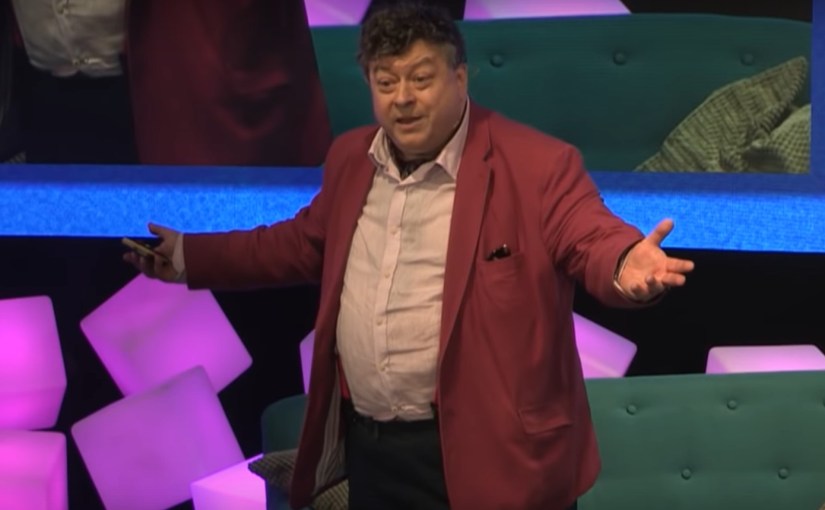
Here at How to Value Stuff, we are all great admirers of Rory Sutherland. Rory is the head Ogilvy Advertising – founded by David Ogilvy, another man we greatly admire. David wrote a legendary book on marketing and sales, called Ogilvy on Advertising – and one of the most influential advertising professionals in the world today.

Rory has a fascinating view of how we perceive the value of the products and services we enjoy. In 2019, Rory published a book called Alchemy: The Surprising Power of Ideas That Don’t Make Sense, which was a follow up on a book he published the year before, Alchemy: The Dark Art and Curious Science of Creating Magic in Brands, Business, and Life.

Here are 10 rules you can adopt which will help you profit by being less logical than everybody else:

1. The Opposite of a Good Idea can be another Good Idea

Nobody can blame you for getting at a single right answer regardless of the materials you used to get there. Conventional logic uses the idea of a single right answer. This is mostly needed where your job is in the line and you need to make everything right.

When it comes to driving at a single right answer, no subjectivity is involved in decision making and what you decide is what you deem right.

2. Don’t Design for Average

Solving a problem with an average person in mind is very difficult. Some models in conventional logic require you to solve a problem for people in aggregate. This can make problems very difficult to solve.

Do not limit yourself to the average person and focus on the fringes. That way, it is easy to find things that will be adopted by extreme consumers.  They can then be ploughed back in the mainstream.

3. It Doesn’t Pay to be Logical if Everybody Else is being Logical

Being logical in business will get you to the same place just like everybody else. In business strategy, it does not pay to be logical because being logical will get you to the same place where your competitors are going. In business, you need to be differentiating yourself away from your competitors.

Find out what your competitors are logically wrong about. If you find out what is wrong with their model, you are in a position to exploit it. Adopt contrarian thinking.

4. Our Attention affects Our Experience

The nature of our attention affects the nature of our experience. Quality is relative. The perception of quality is determined by the difference between expectations and experience. It is more difficult to change how a person experiences something than the expectation of that experience.

Rory gives an example of one of the best hotels he has stayed in. The hotel had previously been a prison or a police station. Everything from the bed and bathroom to the TV and wall hangings was very spartan nature.

Under most circumstances, you normally would have experienced this as a lack of quality. But the hotel was in East Berlin and the experience came across as authentic East Berlin. It fit the circumstances. It met what you would have expected from an authentic East Berlin hotel.

5. If there were a Logical Answer We would have found it Already

If a problem becomes persistent even after discussing it with every person who can relate to it, it means you are giving it a logical explanation. There is a solution somewhere to be found through conventional linear rationality approach.

Exposing everything to logic and the problem persists, it indicates that logic is not the answer to that problem. Gather some courage and test less rational solutions. Context is a marketing superweapon.

6. The problem with Logic is it Kills off Magic

Logic and magic cannot coexist. There is no magic where logic is involved. The rules of logic demand that there can be no magic.

Logic requires that you change your product instead of improving the perception of the product in order to enhance the customer experience. This confines you into doing exclusively objective things because you think that people perceive the world objectively.

7. A Good Guess which stands up to Empirical Observation is still Science

You should not let methodological purity restrict your capability of coming up with multiple solutions. It is good to allow solutions that come in randomly rather than being restricted to explainable solutions. The latter will hold you captive and will monopolize your progress.

8. Test Counterintuitive Things because Nobody Else will

Since you do not want to put your source of livelihood on the line, create a space in your business where you can test things that do not make sense. This will be an advantage to win over your competitor because your experiment will land you in a lucrative business idea that will make you outdo your competitors.

9. Don’t Solve Problems using only Rationality

Solving problems using only rationality is like playing golf using only one club. Using rationality as the only way of solving a problem will get your solution based on a very narrow path.

Solving problems by using only rationality will generate solutions that restrict themselves to a very narrow definition of human motivation and how they think, act and decide.

10. Dare to be Trivial

Sometimes big problems do not require huge intervention. On the contrary, a small thing can have an enormous effect. You do not have to do things in the correct order simply because it is the way they should be done. Small changes, such as alternating the order of options or changing relative scales, can yield an order of magnitude in results.


Diversification | What it really means

According to Wikipedia, “diversification is the process of allocating capital in a way that reduces the exposure to any one particular asset or risk.”

Investopedia has a slightly different take, saying that “[d]iversification is a risk management strategy that mixes a wide variety of investments within a portfolio.”

To many, diversification means investing in the market in general. You can do that by investing in a broad market index, such as an ETF that tracks the S&P500 index. There are also the Russel indexes. Basically, if you own the market, you get the market return.

The Contrarian View on Diversification

But diversity does not necessarily have to mean more. The goal of diversification is not to get the market return but to reduce exposure to a particular event.

What you are trying to achieve by being diversified is to make sure not everything you are investing in moves in tandem. By doing so, you embed optionality into your portfolio.

If you accept this reasoning, you will also agree that a portfolio of 5 stocks can be seen as being diversified if those 5 positions are not affected by the same factors.

Think about it this way: Which of the two portfolios is the safer investment strategy?

  • Portfolio A: A basket of common stock of the 20 biggest financial institutions in the U.S.
  • Portfolio B: A basket of 5 stocks each in a separate industry.

The Value of the Road Not Taken

In 1916 Robert Frost published his poem The Road Not Taken. It is a narrative poem, where the narrator describes a moment when he comes to a fork in the road while taking a walk through a forest. After mulling it over, the narrator decides to take the road that seems to be less travelled.

The poem is by many regarded as one of the most misunderstood poems in history. It is often quoted when expressing views of individualism and not conforming to general convention.


At the end of the poem, the narrator sighs as he tells the reader that he took the road less taken and that it made all the difference. But the sigh is left open to interpretation by Frost, as the reader does not know if the sigh is from relief or regret.

The Misinterpreted Message

You have to be careful of that one; it’s a tricky poem — very tricky,” Frost is known to have said about the poem. The story has it that he wrote it to tease a friend of his, Edward Thomas, who often had problems with coming to a decision over choices that were offered to him. Frost describes him as a person who, “whichever road he went, would be sorry he didn’t go the other”.

An economist would tell you that the problem that Edward Thomas – just as the narrator in the poem – was battling with was the Opportunity Cost of the choices that he had.

Opportunity Cost

The Opportunity Cost of a decision basically equals the benefit of the best alternative option that you have to choose from. This means also means that the opportunity cost is dependent on the situation that you find yourself in at any given time. Furthermore, it means that your opportunity cost is not the same as my opportunity cost.

The concept of opportunity cost is well known in economics and finance, where it is relatively easier to measure the potential outcomes. The Opportunity Cost of Capital, for example, is the rate of return that could have been earned by putting the same money into a different investment with equal risk.

Mistakes of Omission

In The Road Less Taken, the narrator has two choices. Therefore, his opportunity cost is whichever road that he will not take. If he picks the wrong road, he will have made a Mistake of Omission. When asked about their biggest mistakes at the Berkshire Hathaway 2011 annual meeting, the legendary investors Warren Buffett and Charles Munger highlighted specifically about their Mistakes of Omission.


The Road Less Taken

Two roads diverged in a yellow wood,
And sorry I could not travel both
And be one traveler, long I stood
And looked down one as far as I could
To where it bent in the undergrowth;

Then took the other, as just as fair,
And having perhaps the better claim,
Because it was grassy and wanted wear;
Though as for that the passing there
Had worn them really about the same,

And both that morning equally lay
In leaves no step had trodden black.
Oh, I kept the first for another day!
Yet knowing how way leads on to way,
I doubted if I should ever come back.

I shall be telling this with a sigh
Somewhere ages and ages hence:
Two roads diverged in a wood, and I—
I took the one less traveled by,
And that has made all the difference.


How to Value Stuff is a website dedicated to thinking about the value of everything and nothing. What us to value something? Let us know.